Showing posts with label Books. Show all posts

Thursday, June 12, 2014

Summer 2014 Reading List

I'm always eager for the school semester to end because that means that I can read! Sure, a seminary education is built around reading, but not free reading. It's reading to a deadline. Reading to answer questions. Reading for a test. It's reading with parameters and restraints, page counts and chapter summaries. It's not an exercise in personal indulgence and exploration: that's summer reading. 

Over the course of the semester I begin to long for this free reading. When I'm scouring some 17th century text for class, I have this habit of turning from my desk and looking longingly at my bookshelves, whispering sweet assurances to her that someday I will return (occasionally, I'll even walk over to the shelves and daydream about the books I'll read "when I have a chance"). Some people may think this borders on pathological, but hey, I'm an unapologetic bibliophile. 

The following list represents my summer reading shelf. I can't claim that I'll read all of these, or half of them even, but they are the books that I've optimistically set aside for my summer reading. 

Biography

Arnold A. Dallimore, George Whitefield: God's Anointed Servant in the Great Revival of the Eighteenth Century (Wheaton, IL: Crossway, 1990). Whitefield was at the center of the revivals of the 18th century. He was a fervent preacher of the gospel, he was filled with evangelistic zeal, and he ministered on both sides of the Atlantic. 
Iain H. Murray, The Life of Martyn Lloyd-Jones: 1899–1981 (Edinburgh: Banner of Truth, 2013). This Lloyd-Jones biography was one of the books we received in the zero dollar bookstore at Together for the Gospel in April. As a young preacher I'm eager to learn more about Lloyd-Jones, whose preaching ministry influenced so many.


Image Source
D. G. Hart, Defending the Faith: J. Gresham Machen and the Crisis of Conservative Protestantism in Modern America (Phillipsburg, NJ: P & R Publishing, 1994). Machen was a controversial figure and one who has had far-reaching influence-- for good and ill-- on his theological descendents, as John Frame ably pointed out.


Image Source
Theology

Michael Horton, The Christian Faith: A Systematic Theology for Pilgrims on the Way (Grand Rapids: Zondervan, 2011). In an effort to start studying for oral comps next year, I'm hoping to cover a great deal of ground in Horton's systematic theology.
 
Image Source

Jeremiah Burroughs, The Rare Jewel of Christian Contentment (1648; reprint, Edinburgh: Banner of Truth, 1964). This book has a tremendous title. It's an expanded commentary on Philippians 4:11, "...for I have learned in whatever situation I am to be content." I'm reading it with an eye toward preaching through Philippians 4 in July.
Image Source
J. I. Packer, Knowing God, 2nd ed. (Downers Grove, IL: InterVarsity Press, 2003). In January I read Allister McGrath's biography of J. I. Packer, though I have read only bits and spurts of Packer himself. Packer's Knowing God is considered a classic and has sold over a million copies since it was released in 1973.


Knowing God
Image Source
J. Gresham Machen, Christianity and Liberalism, rev. ed (Grand Rapids: Eerdmans, 2009). This is a re-read. Machen, whose biography is also on my summer bookshelf, wrote a gem in Christianity and Liberalism. This book clearly dissects liberal theology at several points and shows how liberal Christianity is really no Christianity at all. Machen's book is as applicable today as when it was first written in 1923.


Image Source
The Ministry of the Church

Robert K. Cheong, God Redeeming His Bride: A Handbook for Church Discipline (Ross-shire, Scotland: Christian Focus, 2012). What is church discipline? Why does the Belgic Confession consider discipline a mark of a true church? What does discipline look like in a local congregation? Is excommunication the only form of church discipline? I hope that this book, which comes highly recommended, will answer some of those questions. 


Image Source
Colin Marshall and Tony Payne, The Trellis and the Vine: The Ministry Mind-Shift That Changes Everything (Kingsford, AU: Mathias Media, 2009). This book comes with rave reviews from Mark Dever, Ligon Duncan, and Al Mohler. Dever goes as far to say, "This is the best book I've read on the nature of church ministry."

Image Source

Biblical Studies

Andrew G. Shead, A Mouth Full of Fire: The Word of God in the words of Jeremiah. New Studies in Biblical Theology (Downers Grove, IL: InterVarsity Press, 2012). Shead, writing in the highly regarded New Studies in Biblical Theology series, has written this study on word language in the book of Jeremiah. 


Image Source

D. A. Carson, A Call to Spiritual Reformation: Priorities from Paul and his Prayers (Grand Rapids: Baker Book House, 1992). Don Carson examines the prayers found in Paul's letters.

Image Source


Fiction

J. R. R. Tolkien, The Lord of the Rings trilogy (London: Unwin Publishers, 1974). I have never read Lord of the Rings (it wasn't until last summer that I read The Hobbit for the first time). I don't speak Elvish. I don't study the maps of Middle Earth. But, as I've been reminded many times, I should read Lord of the Rings and so I've got this dandy edition (quite the artwork) to read through.

Image Source

Timothy Zahn, Heir to the Empire (Toronto: Bantam, 1991). With the new Star Wars movies set to release in the next couple years, I wanted to re-read some of the books that explore the Star Wars universe after the second Death Star is blown to bits by Wedge Antilles and Lando Calrissian. This is book one in The Thrawn Trilogy.

Image Source

Timothy Zahn, Dark Force Rising (Toronto: Bantam, 1992). This is the second part in The Thrawn Trilogy.

Image Source

Saturday, March 8, 2014

Adoption

In the opening pages of Union with Christ: Reframing Theology and Ministry for the Church, J. Todd Billings calls attention to a particular image used in Scripture to explain what Jesus, by his life, death and resurrection, has accomplished for believers: adoption (Rom. 8:14­–17, 23; 9:4; Gal. 4:4­–7; Eph. 1:5; 2:2). Adoption, in the ancient Roman world, usually involved adults being adopted in order that an heir might be arranged for a household (p. 18); thus, adoption came with the privilege of an inheritance but also with the responsibilities of living in a manner fitting of being an heir and a member of the adoptive family. There is a particular intimacy and nearness of God to his adopted children communicated by this familial language. In fact, as Billings says, there is something about the nearness of God that is unnerving. It blows apart our ability to think of God as a conveniently available lifeguard—there and ready to help if needed but who can otherwise be ignored while we have fun. Adoption confers on believers an identity as adopted children that was not earned or acquired by our affability. No, as Galatians 4:4–6 informs us adoption presupposes a God-initiated encounter through the Spirit whereby we are made children of God apart from any thing we've done or will do. 

Monday, August 12, 2013

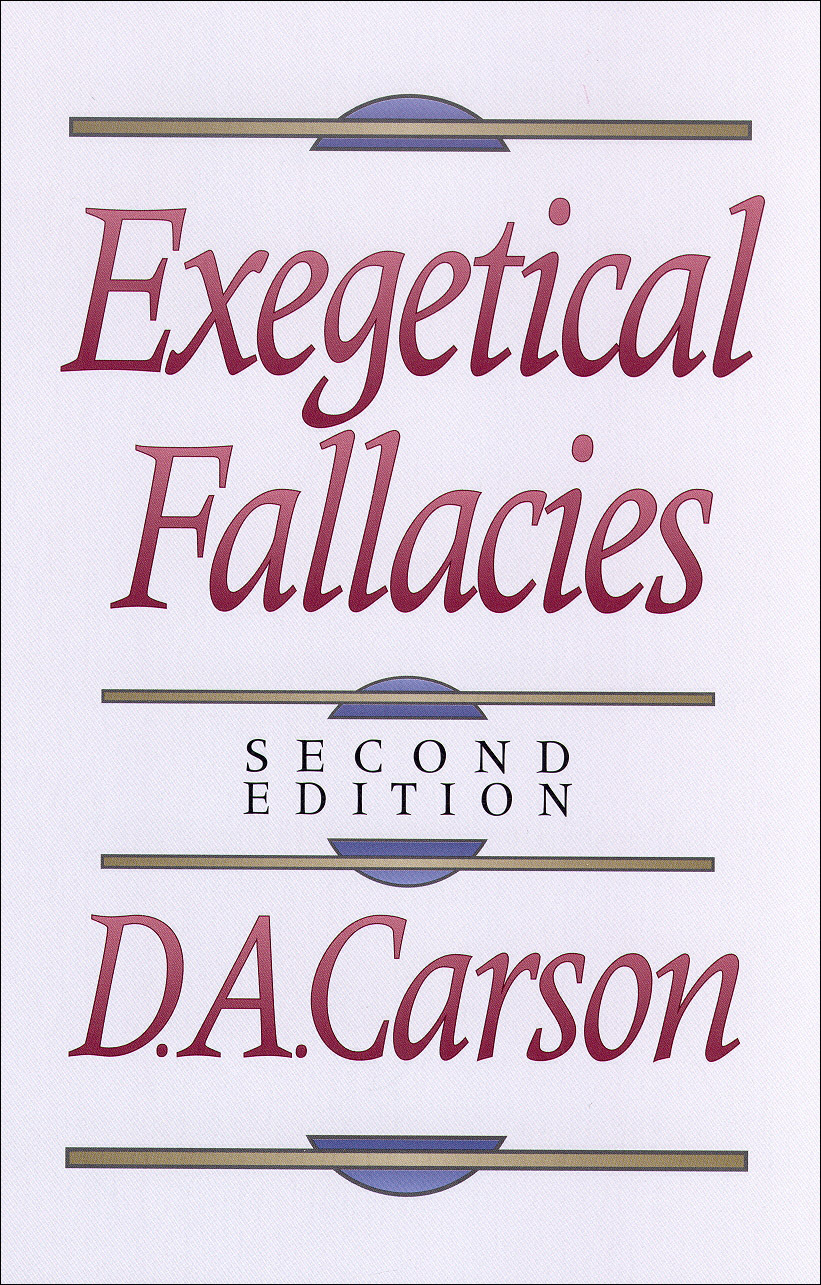
Exegetical Fallacies: Or, How to Avoid Embarrassing Mistakes and False Conclusions

Exegetical Fallacies is one book that has remained on my to-read list for some time. Once or twice I have even picked it up and began reading through it; however, the title rightfully evokes the sense that this is not a book of light reading and so the book remained incomplete for some time. This summer D. A. Carson’s book made it to the top of my reading list again and I was able to set aside the time and mental energy to complete it. It was certainly worth the effort!


Image Source
Exegetical Fallacies is a small, semi-technical book geared towards pastors and seminary students. Dr. Carson, a distinguished New Testament scholar, addresses the numerous ways students of the Scriptures run afoul when doing exegetical work (exegesis refers to the act of finding or interpreting the meaning of a text. Carson provides his definition on p. 23). Exegetical Fallacies gives interpreters the tools necessary to probe points of conflicting when two interpreters of Scripture arrive at contradictory conclusions from a text. When a situation arises where two diligent, sincere interpreters come to opposite, contradictory interpretations, it may be the case that (1) one interpreter is correct and the other has erred (2) neither is correct or (3) both interpreters are partially right and partially wrong, and they must both make changes to their position to better align themselves with the truth. When such disagreement happens, Carson says, “…what is important is that the two interpreters are involved in critical exegesis, exegesis that provides, or attempts to provide, adequate justification of all conclusions reached and of every opinion held” (p. 14). Interpreter must ask what evidence exists to support their interpretation of Scripture. Is there strong evidence to support their conclusions? Could their evidence be stronger? It may be the case that producing such evidence will not resolve every theological conflict, but it will at least allow us to separate the wheat (solid evidence) from the chaff (baseless theological traditions, poor exegesis, or other conclusions arrived at improperly). Exegetical Fallacies exists to shine light upon the chaff, exposing the poor arguments that lead to poor conclusions and in the process strengthening our confidence in the processes that lead to true conclusions and strong convictions. Carson writes, “By exposing our exegetical fallacies, we may become better practitioners of critical exegesis” (p. 14).


Dr. Don Carson
The book is divided into four categories: word-study fallacies, grammatical fallacies, logical fallacies, and presuppositional and historical fallacies. In each section, Carson provides a list of fallacies, describing each fallacy and then illustrating the fallacy in action by highlighting where someone has committed the particular sin against reason in print. The illustrations are particularly helpful to students who should note how subtle such errors can be when inserted amidst countless other paragraphs of written work. They also serve to reinforce the need for a volume such as the one Dr. Carson has produced for us.

Readers should not feel obligated to follow the chapter divisions (I skipped grammatical fallacies and only returned to it when I had finished everything else). Also, the chapter on grammatical fallacies is only useful to those who have an elementary knowledge of Greek. One shortcoming of Exegetical Fallacies is that it does not deal with any issues related to Hebrew exegesis. This would have served to increase the value of an already profitable work for those aspiring to teach the Scriptures.

Thursday, July 25, 2013

The Intolerance of Tolerance

Intolerance is one of those words so widely used, but thought about so little by so many. What makes a person intolerant? What makes a person tolerant? When does disagreement become intolerance? That is why Don Carson’s book The Intolerance of Tolerance is a welcome addition to the bookshelf of any thoughtful observer of culture.

Carson’s book argues that in contemporary Western Culture there are two definitions of tolerance in operation. Previously, tolerance was the acceptance that different views exist (from here on referred to as the “old tolerance”); however, a shift took place so that tolerance came to mean the acceptance of other beliefs. This shift, though subtle, is of great importance. Carson writes:

“To accept that a different or opposing position exists and deserves the right to exist is one thing; to accept the position itself means that one is no longer opposing it. The new tolerance suggests that actually accepting another’s position means believing that position to be true, or at least as true as your own. We move from allowing the free expression of contrary opinions to the acceptance of all opinions; we leap from permitting the articulation of beliefs and claims with which we do not agree to asserting that all beliefs and claims are equally valid. Thus we slide from the old tolerance to the new” (3-4).

The central thesis of Carson’s book is that the new tolerance has become part of the plausibility structure (that is the idea systems that are widely accepted by the culture) of Western culture. The new definition of tolerance has come to dominate social discourse and Carson illustrates many times over how the new tolerance has affected decisions in the realms of politics, education, media, religion, and morality (see chapter two, What is Going On?).   

Chapter three, The History of Tolerance, is Carson’s survey of tolerance in Western intellectual thought. Carson provides historical snapshots that are meant to support his thesis. A change has taken place. It was once the case that the old tolerance was located within the cultural matrix (and dependent upon it); however, the new tolerance became understood independent of culture so that it was raised above culture to be the supreme virtue (75-77). Yet ultimately, when tolerance is detached from the cultural matrix, it becomes a tool for accumulating and exercising control over the populace.

Chapter five examines how the old/new tolerance distinction shapes Christianity. Chapters six and seven explore in greater depth how the new tolerance affects moral and political discourse.

There is a short epilogue (Way Ahead: Ten Words) where Carson attempts to offer counsel for a future where the new tolerance is in full operation. The brevity of this section (one wishes that Carson would have spent more time here) becomes an invitation to readers to think beyond the pages of the book and consider how to navigate the waters ahead.   

Many have applauded Carson’s contribution already. For those interested, you can find more on the book here:

Albert Mohler interviews Carson on his Thinking in Public program. The interview is available in both audio and transcript form.

Tim Challies adds his thoughts here.

Kevin DeYoung listed The Intolerance of Tolerance as one of his top ten books of 2012. 

For those interested you can download Dr. Carson's lectures on the topic online. Go to the linked page and search for 'intolerance of tolerance'.

Thursday, April 11, 2013

Books Worth Re-Reading


My reading list acquires new titles at such a rapid rate that it is unusual for me to get around to re-reading books. Yet, there are books that are worth reading again. My list of books worth reading a second time takes into consideration several factors. A book worth re-reading should: 

1. Be well written. Prose should be succinct. The language should be clear. The author must capture the reader and not allow them to escape until the book is finished.
2. Make a unique contribution to its field. A history book worth returning to should present an event in a way or from an angle that is unparalleled in other works. A fiction book that is worthy of reading again should not follow the same pattern of ten other books on the shelf. 
3. Contain so much useful material that the reader cannot help but return to it again.
4. Be thoroughly enjoyable. If, while reading the book the first time, you wanted to tell everyone about what you were reading, that may mean that the book is worthy of a second go through.
5. Be particularly edifying. If I know the book is good for my soul, I’ll return to it.

I don’t think it’s necessary for a book to fall into all of these categories, but it should (for me) fall into at least one of these four. Readers may also give different weight to each of the categories. For instance, for a geek like myself, I prioritize the first three categories. For a person brimming with creativity like my wife, she’ll grab a cup of tea and return to a book that belongs to categories one and four.

Here is my initial list of books that I would like to re-read in the future (in no particular order):

Christianity and Liberalism by J. Gresham Machen. Exactly ninety-years after its publication, Christianity and Liberalism speaks as clearly to the problems facing Christianity today as it did to the threat Machen was addressing in 1923.  

 
A Tale of Two Cities by Charles Dickens. I’ve read it twice. A Tale of Two Cities is a brilliant story of love, drama, sacrifice, and redemption. 


The Count of Monte Cristo by Alexandre Dumas. There is something compelling in this classic story of determined revenge.


Humility: True Greatness by C. J. Mahaney. This appears on the list because it falls under my fifth criterion. Pride is a nagging sin and so Humility is a book that I will return to. 

  
Pilgrim’s Progress by John Bunyan. In J. I. Packer’s words, “I am still telling anyone who will listen that, whatever else they do, they should read both parts of Bunyan’s Pilgrim’s Progress once ever year.” A recommendation from J. I. Packer is a sixth category that I failed to include above. 


The Reason for God: Belief in an Age of Skepticism by Tim Keller. Almost anything by Keller could stand on this list. 

  
True Sexual Morality: Recovering Biblical Standards for a Culture in Crisis by Daniel Hiembach. Hiembach’s book is loaded with vitally important, applicable content. I’ll return to this book more than once in order to begin mining its rich contribution to the field of sexual ethics.


Institutes of Christian Religion by John Calvin. Okay, so I’m not even done reading it through for the first time (I’m swimming in book two somewhere); regardless, the Institutes is one of the finest works of theology ever written.

 
Unbroken: A World War II Story of Survival, Resilience, and Redemption by Laura Hillenbrand. This was a thoroughly entertaining, hard-to-believe story of an American shot down over the Pacific Ocean during World War Two.

 
That’s the beginnings of my list. How about you? What makes a book re-readable for you? What books would you like to read again?

Thursday, January 31, 2013

The Conviction to Lead

Albert Mohler’s life testifies to his qualification for writing a book on leadership. Mohler was appointed president of the Southern Baptist Theological Seminary at 33 years old. As newly appointed president, Mohler adopted a seminary in theological turmoil (Gregory Wills outlines Mohler’s role in returning SBTS from its theological liberalism to its original convictions in Southern Baptist Theological Seminary, 1859-2009. Wills account of SBTS through the 1980's and 1990's is worth the read) and was charged with leading a seminary that was in decline into the 21st century. This he has done with remarkable success. SBTS is now, from my vantage point, a thriving center for evangelical scholarship and pastoral preparation. 


The Conviction to Lead is an excellent book. Mohler’s thesis is that our beliefs cannot be separated from our leadership. Effective leaders are those who, through every means possible, disseminate their deeply held convictions and set up their organization for preserving and furthering the beliefs they value most. While reading The Conviction to Lead I found myself confronted with activities, habits, and mindsets that I had never thought of as leadership functions. This was a strength of the book. I found my thinking about leadership expanded in terms of what the effective leader does to refine his convictions and advance them, but I also found my understanding of the essence of leadership narrowed to a single point: advancing the beliefs, values, and convictions that I believe are true and beneficial to those I am leading. 


Many have written reviews on Mohler’s book already, so I’ll simply refer you elsewhere for a more detailed walk through of the book. However, I would like to say that this would be a good book for any Christian in a position of leadership (whether in a Christian organization or not), but especially for those who are leading at the local church level. Pastors, elders, deacons, and ministry team leaders will find their understanding of their task made clearer through reading The Conviction to Lead. 

For the Mohler's own introduction, see his article The Conviction to Lead. 

Tim Challies' review can be read here. Of the book, Challies writes that this is probably Mohler's best book, "The Conviction to Lead has all the marks of an original work, oozing with wisdom and dripping with passion." Colin Hansen's here. Also, you'll find it on Kevin DeYoung's list of the best books of 2012.

Monday, January 21, 2013

Joy in the Morning


I find that writing humor well is one of the most difficult things to do. It’s one thing to deliver a comedic monologue to a group of friends. In such settings you have at your command body language, intonation, verbal pauses, and other tools that can quickly have your friends in stitches. The written word does not provide many of these tools of humor and so I’m impressed when anyone can write comedy well.

P. G. Wodehouse demonstrates that comedic writing can be done, and done well. Joy in the Morning follows the mishaps and missteps of the bumbling English gentleman, Bertram Wooster, as he breaks up an engagement only to find himself inadvertently engaged to the rebounding bride-that-would’ve-been, unintentionally foils the lucrative shipping deal being plotted by his Uncle, and exacerbates tensions between his friend Boko Fittleworth and the guardian of Boko’s love, Nobby. Having stuck himself in all the trouble that a small English town might muster, Wooster must rely on his faithful valet to extract him from the trouble that surely follows incinerated English cottages, stolen police uniforms, jilted lovers, and, worst of all, an overeager boy scout. Joy in the Morning is a very enjoyable work of British comedy that will inject some laughter into your reading diet.

Thursday, January 17, 2013

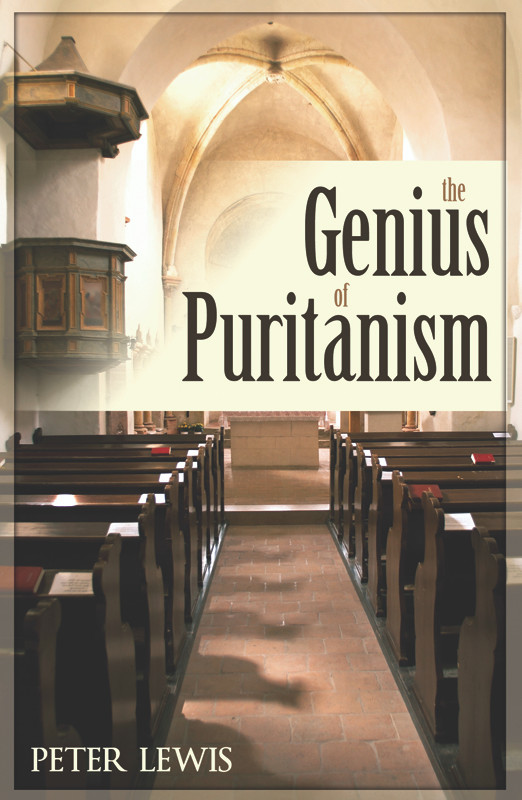
The Genius of Puritanism

To some, the suggestion that the Puritan movement possessed a genius to it would be a laughable suggestion. Those who sat under their preaching, who received counsel in their studies--or today while reading republished sermons and books-- would know that Puritan pastors did indeed possess a genius in one area especially that has, quite possibly, outstripped any group of pastors before or since the Puritans ministered in 16th and 17th century England. The Puritans excelled in teaching all theology as practical theology; and, as such, the typical Puritan sermon would not merely announce a theological idea, but would explain why it mattered and how the average layperson might apply this truth from Scripture to their life. If the sermon was on a text that called men and women to trust in the Lord, the sermon would first discuss the selected text, then identify the theological truth or doctrine to be found within the text (while also explaining how that doctrine was derived from Scripture), and then would apply that doctrine to the lives of that specific congregation using vivid examples and memorable aphorisms. In applying the text, the Puritan pastor would be sure to give counsel on how to (for instance) trust in God-- perhaps giving three, six, or nine helps for trusting in God in their current situations. The typical Puritan sermon was not vague, general, or trite, but sought to equip and empower the immediate congregation for living out God's Word and growing in faith, regardless of the ease or difficulty of personal circumstances.


Peter Lewis' The Genius of Puritanism is an punchy examination of Puritan preaching, worship, and spiritual counseling practices. The book begins by a brief introduction to Puritan history and thought that would be helpful for any who are wondering who the Puritans were and what they were about. Then it proceeds to discuss the Puritan in the pulpit, in the pew, and in private. It is this third element that demands most of the book's attention. 

With regard to the Puritan in private (and by this Lewis is referring to the Puritan Pastor in his study as he cared for those people under his care), Lewis directs his attention to the Puritan pastors treatment of spiritual depression, or as the Puritans also called it, spiritual desertion-- the feeling in a person that God has abandoned them. While God does not actually abandon those he has forgiven and claimed as his own, certain individuals may truly feel as if God has deserted. This feeling is not imaginary or foolish, but is a genuine heaviness of heart and soul that comes upon a person who believes that they are God forsaken. For the pastor, he might encounter this as a woman comes into his study and complains that she no longer feels like God is there when she prays or reads her Bible. God feels distant to her! A teenager might come to the pastor because he has done something that he knew was wrong and now wrestles with deep-seated guilt and the fear that God could no longer accept him back. Or, the pastor may be confronted with a father who has suddenly lost his son, and feels that God has abandoned him. All three people really feel like God is distant and, quite possibly in their minds, that he no longer loves them. To these scenarios, which are quite plausible today, the Puritans offer tremendously keen insights on how to explain this feeling of desertion and what might be done to alleviate this spiritual darkness. 

Lewis, an English pastor, is writing as one who has enjoyed and revered the wisdom of the Puritans and it clearly shows through his writing. While for some readers Lewis' bias might detract from the book, his interest in the Puritans makes him more than willing to let them speak for themselves. Though The Genius of Puritanism is small, it is slow reading because of extensive quotations from a wide range of Puritan works. This allows the reader to hear the Puritan voice firsthand and to truly take in the compassionate tone that these pastors preached with and the practical counsel they offered-- in private and in public-- to those who were struggling to find the peace and comfort that was supposedly offered in Christ. 

The book offers its own commendation in the conclusion, when it says, "Every Christian is aware of the many forms of spiritual depression that can and do accompany the Christian life in this uncertain world. Perhaps few ages have been more neurotic than our own, and the crying need for an adequate, biblical, pastoral ministry to anguished minds, disillusioned Christians, stricken consciences and subconscious fears, was never more evidence than in our day. Such cases, and in such number, need more studied and scriptural treatment than they are receiving... In this matter, as in all others, we have the Puritans' Bible, the Puritans' God-- why may we not have 'the Puritan genius'?" (136). This genius, this acute ability to diagnosis the heart and prescribe treatment for our spiritual difficulties, is clearly introduced in this fine work. 

To students of the Puritans, to pastors, and to those who desire to see what a nuanced and practical theology looks like, I suggest the slow-reading, but valuable, The Genius of Puritanism.

Tuesday, December 11, 2012

C.S. Lewis’ Call to Old, Primary Texts

Introductions and forewords can often be seen as a doormat one must quickly step over before entering the reader’s real destination. This cannot be said of C.S. Lewis’ introduction to St. Athanasius' On the Incarnation. It is an accessible apology for old books, one that argues persuasively for the merits of reading beyond one’s own age and into the past.

C.S. Lewis diagnoses a clear tendency towards the reading of modern, secondary texts over the reading of older, primary ones. If given the option of reading Aristotle or reading a book about Aristotle, Lewis says, the modern reader will choose to read about Aristotle. This Lewis finds difficult to understand for at least four reasons.

First, primary texts are often more accessible than the doorstop volumes produced by the modern commentator about the primary text. Secondary texts are littered with a great deal of information surrounding the original work, but often so much information is spewed about the surrounding issues that the work itself—its voice, its message—are lost, as Lewis cheekily puts it, in the “isms”.

Second, “…first hand knowledge is not only more worth acquiring than second-hand knowledge, but is usually much easier and more delightful to acquire.”[1] Like a game of Broken Telephone, where the original message slowly loses something as it is manhandled down the line from one person to the next, something is also lost from the power of the original work as secondary resources comment on the original work. Why not hear the message in its full force and clarity, rather than accept a (potentially) muddled form that is the commentator’s comments on a previous commentary about the primary work!

Third, a new book is not old enough to determine its true worth. Lewis writes, “A new book is still on its trial and the amateur is not in a position to judge it.”[2] In other words, there is a sort of testing period that any writing must undergo. The best writing endures the test of time, such that it retains its strength despite the many eyes that have fallen upon it and the brightest minds that have sifted through it.

Fourth, and perhaps most helpful, new books are still blind to the mistakes of their own age. Olds books have the benefit—not of being without error or blind spot—but not having the same error.

For these reasons, Lewis suggests a reading rule of thumb: read one old book for every modern one; or, if you cannot help yourself, read one old book for every three new ones.[3]

Today there is a continued resistance to reading primary materials that still exists nearly seventy years after Lewis wrote his apology for reading old books. In Lewis’ introduction, he suggests that the preference for modern texts is due to a certain humility on the part of readers. Is this the same reason for the modern-preference today? Is it because of a modern distrust of the past, a sort of “chronological snobbery” (to steal another phrase from Lewis)? Is it ignorance? Or, is it now a matter of contemporary laziness that simply cannot be bothered doing the work of interpreting older works in light of their specific contexts?

If humility, as Lewis suggested, is no longer the excuse (and I’m inclined to believe it is not the sole reason), how might pastors, professors, and church leaders promote the reading of older, primary texts to Christians under their charge for their the edification? Several initial suggestions come to mind. 


  • Create and promote reading groups that utilize old, classic works. While studying for my undergraduate degree, a professor gathered with a group of male students in his office on Wednesday mornings at 7:00am to pray, fellowship, and read Augustine’s Confessions and Dietrich Bonhoeffer’s Life Together. This put classic, primary material before us.
  • Be familiar with the primary materials as leaders. Know them and appreciate them before you commend them.
  • Preach sermons that are full of history. Make reference to the titans of the Christian faith throughout the course of a preaching ministry. Create a familiarity with the names, personalities, and challenges faced by key figures in the history of the Church.
  • Educate fellow Christians on the historical contexts through preaching, church education programs and catechism programs, and other means. Equip the congregation for better understanding the importance of specific historical periods to the Church and to the world.
  • Be selective and judicious in assigning or promoting passages from primary materials. Give only the best. To whet appetites, give tasty morsels, don’t slop 700 pages of City of God onto a poor sister’s plate and tell her to talk to you next week.
  • Leaders must do the heavy work of showing how historical authors speak to our call to be faithful disciples of Christ. In my own life, this has manifested itself in a love for the Puritans because of the encouragement they are to holy living and courage in the face of death and suffering. I see great reward in reading these primary texts as I seek to live out Christ’s call. I believe leaders must do this in increasing measure for their people.


[1] C.S. Lewis, “Introduction,” in St. Athanasius: On the Incarnation, pp. 3-10 (Crestwood, NY: St. Vladimir’s Seminary Press, 1975), 3.
[2] Ibid., 4.
[3] Ibid.

Friday, September 28, 2012

Summer Reading Accomplishments

Before I unintentionally backslid from the blogosphere, I had posted a visual summer reading list. This reading list is partially to blame for my absence. Typically, or so goes the implied blog etiquette, one must apologize profusely for one's virtual absence or confess to one's blogging shortcomings. 

Relaxing with beverage near at hand, while
watching my beleaguered Toronto Blue Jays.
I shall not. My absence was completely enjoyed and without need of excuse. I had an excellent summer that provided opportunity to see my families, preach, lending a helping hand at Community Christian Reformed Church as part of my summer internship (perhaps more on that later), camp and swim around Lake Michigan, and, on a brief occasion, relax with beverage in hand.

I also wedged time into my summer to tackle that visual summer reading list (a guy's gotta have priorities!). While my ambitious goal was not met, I did manage to devour a couple thousand pages worth of reading. 

Here's a visual of what I aimed for versus what I accomplished (left) versus what I had set out to accomplishment (right). I managed to read: 
  • The Old Testament in my ESV Study Bible, with introductions 
  • The Good News We Almost Forgot by Kevin DeYoung. My wife and I had been reading it together for our devotions and were almost done it when we started the summer. 
  • Spurgeon by Arnold Dallimore 
  • Memoirs of an Ordinary Pastor by D.A. Carson 
  • Basics for Believers by D.A. Carson 
  • Planting Missional Churches by Ed Stetzer (not pictured)
  • Unbroken by Laura Hillenbrand (not pictured) 
  • The Hobbit by J.R.R. Tolkien. First time read. 
  • Love that Lasts by Gary and Betsy Ricucci
  • True Sexual Morality by Daniel Hiembach 
  • Lizzie Bright and the Buckminster Boy by Gary Schmidt. My wife read this one to me while we drove home. 
  • A Tale of Two Cities by Charles Dickens. I felt the urge to re-read this classic. 
  • The Pilgrim's Progress by John Bunyan


Also, not quite finished (but nearly) are: 
  •  Writing Tools by Roy Peter Clark 
  • The Christian Lover by Michael Haykin
Hopefully, now that my brain is entering into school mode, I'll take some time to provide short blurbs some of these titles in the days and weeks to come. Stay tuned.